Showing posts with label Korean. Show all posts

Sunday, November 11, 2012

I'm Moving Blogs to NJ STILL EATS: Are You In or Are You In??


I have officially exceeded my image capacity for this domain so am launching the sequel to my original blog as njstilleats.blogspot.com beginning TONIGHT at 6pm PST with a whole new look thanks to the new blogspot features that gave it a nice makeover!

I have a ton of food stories to tell from my Korea trip and beyond so stay tuned my friends and don't forget to follow me and bookmark me (Boy, I don't think I"ve ever said that before -- bookmark me. Oh, and please add me as a favorite or should I say "please favorite me"?) again! And tell me what you think of the site's new look. I tried to modernize it and make it more visual with EXTRA LARGE images as a nod to the art of food porn. The above image is a teaser of one of the top three things I had while in Korea. Can you guess what it is? You're just going to have to go here to find out.

Sunday, November 4, 2012

Korea Roundup I: Noodles with Ice Floating and the Best Soju Pairing


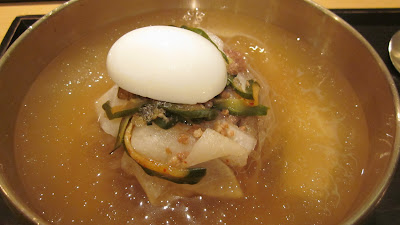
I know that for those who don't live in Korea or LA, complaining that there's no good nengmyun, or cold buckwheat noodles to be found in LA gets me no sympathy. But just like my rant on a lack of decent ttukbokki a while back, there are plenty of things that LA doesn't do well or doesn't do at all. And nengmyun is one of them. So it was with great satisfaction that within a few hours of my arrival into Korea, I got to have excellent nengmyun at Hanilkwan, an old school restaurant with tons of history that since expanded into three locations. I went to the one near Korea's "Times Square" in Youngdeungpo that is nothing like NY's Times Square but is a huge mall that has everything.


I was happy as the bowl of nengmyun was placed before me and I saw delightful pieces of frozen broth floating around the cold soup, not to mention the neatly stacked radishes, cucumbers and pear daintily topped with half a hard boiled egg. The broth was so refreshing and spot on. I could taste the meatiness of the broth that was like 50 times more complex than the ones I've had in LA. Ok, I'll stop the hating. But I can't help but gush at this seemingly simple but very complicated dish.

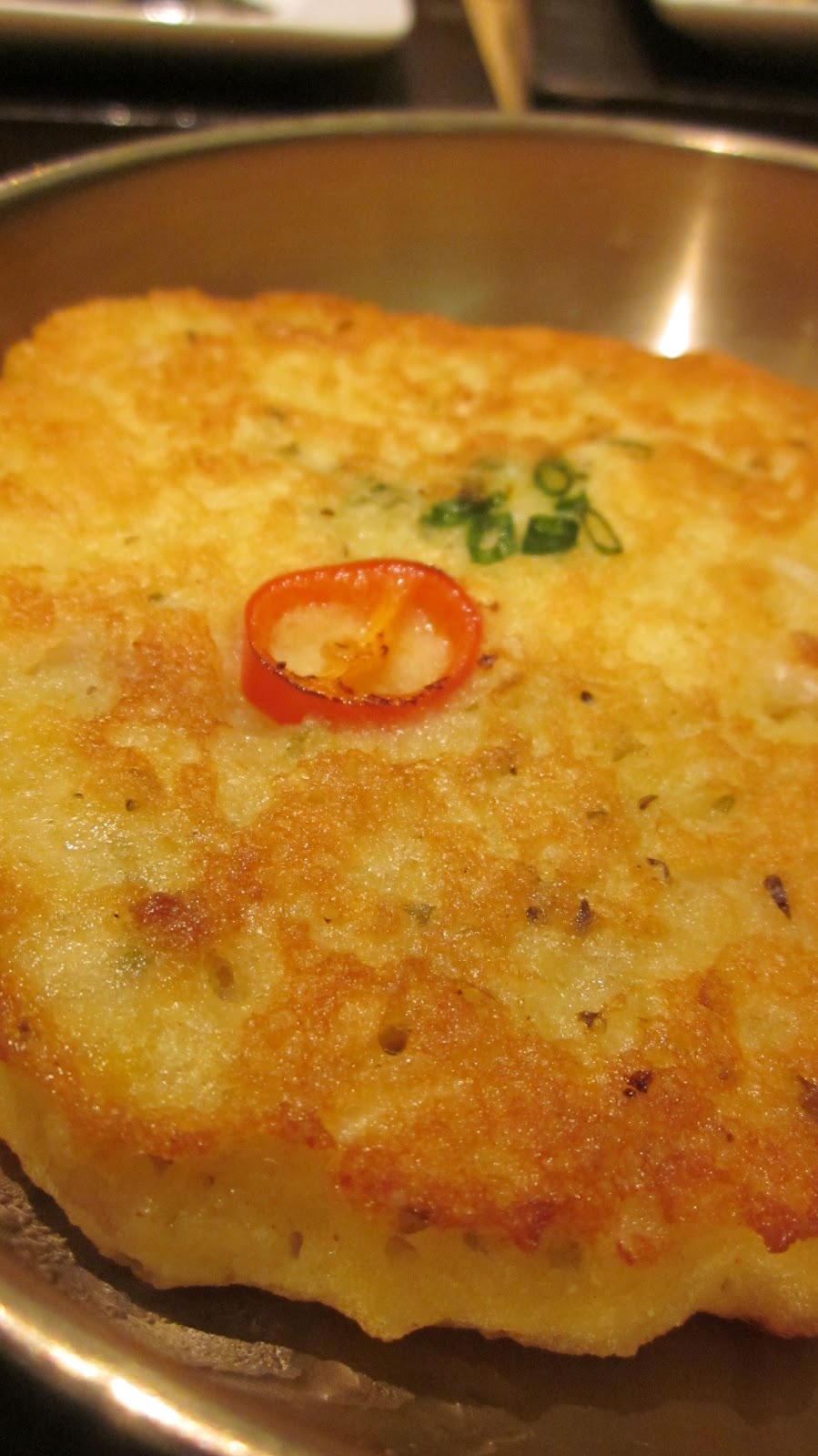
The side dishes were also fresh and not overly salted. The bindaettuk, or mung bean pancakes actually imparted the mung bean flavor instead of the doughy tasting ones that have added too much flour to the mix. It hadn't been reheated 20 times and smelling like old oil. It was crispy and browned just right.


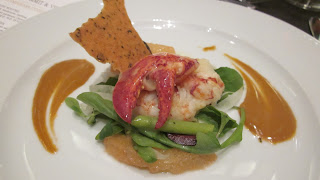
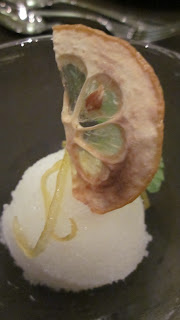
On a totally different note, I enjoyed the food at an event we had at Raum in Seoul. It's not a restaurant but the lobster starter and the lime sorbet were highlights.

From riches to rags, I also loved Saemaeul Shikdang, which plays to our nostalgic love of old pots and rustic hole in the wall-type atmosphere and takes it corporate. I was somewhat surprised and disheartened to learn that it's actually a chain restaurant with multiple locations. Not that chains can't be good but I'm wondering whether I was influenced by this atmosphere to love the food. Still, I loved it.

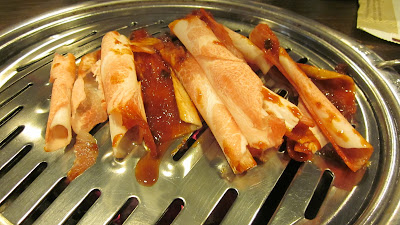
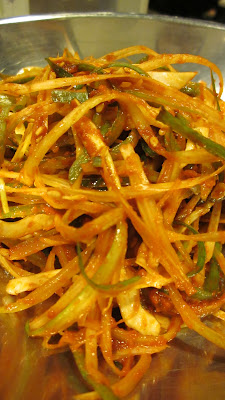
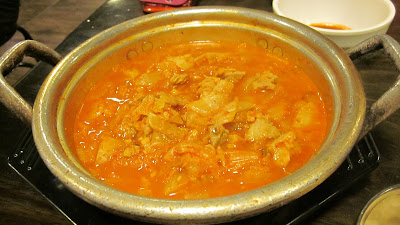
The best dishes are chadol (thinly sliced beef) smothered in spicy marinade and cooked tableside, along with kimchi jjigae, served in those yellow pots you see people eat instant ramyun in Korean dramas. The marinade was like the spicy pork bulgoki, only this was for beef. It came with shredded Korean green onions seasoned with some more spicy sauce because there can never be too much spice.

The kimchi stew with pork pieces was spicy, flavorful and perfect with a cold glass of soju. Now I don't normally crave soju or even like the taste of it, especially not the plain stuff. But the kimchi jjigae was so delicious and the garlicky, spicy meat was so juicy and perfectly marinated that washing it down with soju seemed like the most natural thing to do. I also consumed a lot of rice to temper the strong flavors.


I mean look at that pot. Doesn't it remind you of those drinking scenes in dramas? "아줌마, 여기 소주 한병 더요!" ("One more bottle of soju please!") I was tempted but got an extra  공기밥 (bowl of rice) instead. Stay tuned for second entry next week.

Sunday, September 16, 2012

Koreatown Food Tour Roundup: Red Hot Mackerel to Ice Cold Buckwheat Noodles


I recently led a food tour of LA's Koreatown where we made five stops along 6th street and got to sample delicious dishes ranging from kimchi spam stew and shaved ice with red beans to cold buckwheat noodles and fried chicken.

Here are highlights:

1. Seongbukdong

We had the galbijjim, braised short ribs slow cooked in a garlicky, salty and sweet sauce for hours and hours until it delightfully crumbles upon popping a morsel into your mouth.

The godeungeojorim, braised mackerel that was also slow cooked equally garlicky but spicy and slightly sweet. The mackerel chunks were super tender as well, as were the moo, Korean radishes, which are my favorite part of this dish.

We also had grilled mackerel as well grilled covina, or jogi, as the fish is known in Korea. They were both good but I liked the braised version of mackerel better. Grilled versions would be good if you're in the mood for something lighter.


The pork bulgoki, where the meat is marinated in a spicy sauce as opposed to a salty soy sauce-based sauce like the classic beef bulgoki. The marinade wasn't too sweet and the pork would make a fine accompaniment to a cold glass of soju.

The duenjangjjigae, or fermented soy bean paste stew, also known as miso on steroids, was good but I liked the one in Jangan Duenjang better.

Another thing worth noting is the banchan, or side dishes, that come out. The owner personally made the acorn jelly that came topped with a soy sauce, red pepper and scallion mix. The jelly was very concentrated in flavor and I could tell it had been made with care, unlike the commercial ones you find ready-made in markets.
Since the restaurant specializes in Kyungsang Province's regional cuisine from the southeastern part of South Korea with a large coastal area, the seafood dishes are its most popular dishes.

2. Ice Kiss

With temperatures hitting 100+, patbingsoo, or shaved ice with red bean and a bunch of fruit and ice cream, was a welcome treat.

We had different variations with strawberries, bananas, taro or green tea ice cream, all topped with some colorful corn flakes pristinely sitting atop a dollop of whipped cream.

Taro was my favorite, closely followed by the green tea. I love that it had a ton of fresh fruits and not too sweet.

In Korea, it's apparently so popular that every fast food joint offers it, including KFC, Burger King and Mickey D's.

3. Chunju Hanil Kwan

Ah, spam and kimchi. They are like peanut butter and jelly. They go so well together although I must say, it's hard for me to swallow spam these days. I used to love it too, but I think my taste buds have changed.

Having said that, the budaejjigae, or military base stew, as it's called, totally hits the spot with its spiciness and perfectly aged kimchi.

The stew has tragic origins dating back to the Korean War, where US involvement led to the introduction of spam, vienna sausage and other canned, processed foods to Korea. They were considered fancy foods after the war when the country was so impoverished that even garbage and scraps from the US military base was coveted as food. Koreans allegedly threw everything coming out of the bases, including spam and sausage leftovers, into a stew and threw in some kimchi and boiled it to death.

The military base stew was born. Decades later, the stew is now a popular accompaniment to soju among younger generations.

4. Chilbomyunok

We needed another reprieve from the scorching heat so sampled some ice cold nengmyun, buckwheat noodles. A North Korean specialty, we got both the broth one and the one with less broth and smothered in a spicy, tangy and sweet sauce. Both mul nengmyun (brothy one) and bibim nengmyun (spicy one) were very respectable but as my previous review said, I go here for the yooksu, that hot beef broth that basically like extra comforting soup that's at once garlicky, salty and super flavorful.

5. Kyochon Chicken

This photo is officially the very first photo of an actual person, Ruth, who was one of the 13 tour participants. She is sampling the soy and garlic fried chicken leg with some pickled radishes.

I love those radishes, although my beef is with having to pay for what in Korea you would get for free. It felt like paying for kimchi but I'll let it go.

You can still sign up for the 9/22 tour here, which may include slightly different stops and samplings.

Sunday, May 13, 2012

Young Kyung: Old School Korean Chinese Classics like Jjajangmyun and Tangsuyook

I think watching one too many Korean soaps had given me a hankering for jjajangmyun, the classic Korean Chinese dish of slippery noodles in a greasy and delicious black bean sauce. That's because of all the many eating scenes on Korean TV, there's always a requisite scene of a delivery man bringing a bunch of glistening noodles that people subsequently wolf down in exactly two minutes. So I went to Young Kyung (also spelled Young King, although in Korean, it's 연경 and therefore should be romanized as Yeon Kyung. Whatever.) in Koreatown, probably one of the most old-school establishments serving the dish.
It's not the most photogenic dish. It doesn't score any points for food porn. Once you mix the noodles up with the black bean sauce, forget about it. It's even less appealing to the eye. But take a bite and you won't be able to stop. The pork and onion pieces in the sauce coat the noodles evenly. Key is to mix it up before the noodles get too dry and start sticking to each other. The noodles were not too soft although they could have been a bit less cooked and the sauce was not too sweet and just salty enough. Some places put too much caramel or corn syrup and ruin the sauce by making it taste like candy.

While the dish is good by itself, it wouldn't be hitting the spot completely without the accompaniment of 1) tangsuyook, sweet and sour pork/beef and 2) Korean Chinese kimchi made with green cabbage instead of the traditional napa. I liked the way Young Kyung served it -- the deep fried morsels of beef separate from the delightfully gooey, sweet and sour sauce dotted with slices of carrots, cucumber, mushrooms and green onions. This way, you only need to add sauce to parts of the beef pieces so the rest stays crunchy sans sauce. And crunchy they were. That's another aspect of the tangsuyook I liked -- the beef pieces were extremely crispy, likely coated in sticky rice flour that make them extra crispy.
Then the kimchi was not bad, although it wasn't great. It was a bit watered down but maybe they didn't want the spiciness to overtake the flavor of the noodles. Gotta love a place that takes their food so seriously that when asked to box the leftover tangsuyook, the server brings two separate boxes, one for the meat and another for the sauce. When I commented on it, she emphatically said, "of course they should be separate!" The quality of the meat wasn't all that great but I was impressed with the care they put into making it crispy and the sauce wasn't too gooey-thick or overly sweet like many other places.

It also serves raw sliced onions with concentrated black bean sauce as a dip and that's only for the brave who don't have to worry about having onion breath afterwards. Pour some vinegar over the onions to reduce the spiciness if you're diving into them. Pickled radishes are usually offered in Korean Chinese restaurants but for some reason, not this one.

For a bit of history, Korean Chinese dishes like jjajangmyun were brought into Korea by Chinese immigrants in late 19th century and is said to have originated from Shandong province in China. The modern-day version is a modified version of the original, which didn't have meat or vegetables and was lighter in color. Many ethnic Chinese in Korea used to run restaurants serving this dish although that has changed in Korea.

At Young Kyung, however, the servers spoke to the Korean customers in Korean and to each other in Mandarin, indicating their ethnic Chinese heritage.

Monday, February 13, 2012

Soban in Koreatown: Raw Garlicky Marinated Crab + Rice to Soak Up the Salt

I've always been a big fan of kanjang kyejang, or raw crab marinated in garlic and soy sauce. It's a pain to eat but well worth it. I'm pretty picky about my raw crab so I hadn't had it in LA, especially after having such good versions in Korea on a recent trip.

But I had heard about Soban from a fellow foodie friend who raved about it. So I checked it out and was pleasantly surprised.

Kyejang should be garlicky and meaty, with plenty of sodium to go around so you crave rice - a lot of rice. Soban's wasn't as meaty as the ones in Korea but perhaps it's unfair to compare it to the OG, so to speak. Ok, the Korean version in America was not bad. The crab was fresh and it was plenty salty.

I liked that the banchan, or side dishes, were just as plentiful. They didn't blow me away but they were, for the most part, mild, simple and complemented the strong flavors of the crab well. None of them was particularly memorable.

The brown rice with grains was a nice touch and we also ordered the fish soup, which was just ok. I heard some talk about the galbi jjim, or braised ribs, but frankly my dear, I've never had galbi jjim at a restaurant that was better than home-cooked ones, but I do give a damn about this dish (you're my generation if you get the reference) so I usually just make a mean one at home.

The bottom line is, go for the crab if you want to try something new or you're just a plain old crab fiend because it's definitely not cheap.


For the finale, make sure you add some of the rice onto the crab carcass and mix it in with the juices. It's probably the best part of the meal after you've totaled the fleshiest part of the crab.

Wednesday, January 18, 2012

Cooking: Greens and Other Side Dishes Make for Great Home-made Bibimbap

I tried to recreate all the amazing greens and namul (side dishes) that some of the best home-cooks made in Korea. Not surprisingly, the ingredients weren't as good out here so it definitely wasn't the same, but they were still good.

I made my version of bibimbap (rice mixed with vegetables -- usually meat is added but I left it out to keep it healthy) out of the bean sprouts, spinach, radish, nengi (aromatic greens attached to a tiny root that is cleaned and consumed), carrots, shitake mushrooms and sauteed kimchi, topped with an oozing fried egg. Since all the vegetables had been blanched, boiled or stir fried with some garlic, green onions and slightly seasoned, they melded well together, as some less salty veggies complemented the saltier ones I seasoned with duenjang, fermented soybean paste.

It also made the rice very healthy, using brown rice and adding barley, red beans, black beans, millet and other grains and beans packed with fiber and other nutritious stuff. I also added buchu, a green I had raved about in a recent Korea post.

Usually a red pepper paste mixed with sesame oil is added to mix the rice and vegetables but I didn't need it here because the sauteed kimchi did the trick. I added extra sesame oil, and it was good. I felt so nourished after eating this and I didn't get sick of it despite eating it over and over again. It's that good.

I won't post the recipes for each of the vegetables because they're so simple. Check out the post I did on the nengi namul using duenjang as seasoning.

Or, you'll just have to buy my cookbook someday!

Thursday, December 15, 2011

Cooking: Combine Scallions and Seafood to Make Awesome Haemul Pajeon

There's nothing like home-made haemul pajeon, or pancakes made with jjokpa (Korean green onions), oysters and clams (sometimes with squid but not this time). It's so easy to make and always a crowd pleaser. Just mix some flour and egg with some water and add the jjokpa and sprinkle some of the seafood onto the pan when you pour the batter. It goes well with makgeolli, a Korean rice drink, or just as part of a regular meal.

Saturday, October 29, 2011

Madang621: Excellent Side Dishes But Mains Fail to Impress

I wasn't sure what to expect from the revamped Bann space in the CGV complex at the heart of Koreatown on Western and Wilshire. I had never been to the previous spot but Madang621 initially looked like style over substance from the outside. Even though it operates as Madang621, it doesn't have a new website or yelp page (I don't get why so few Korean restaurants have websites -- but let me save that for a rant or future business idea). Different priorities...


In any case, I wasn't blown away but I did enjoy some things and here are some highlights.

I can't recall the last time I had yookhoe, super quality raw meat cut in strips and seasoned with soy sauce, garlic and some sweetness, topped with a raw yolk (yes, just like steak tartare!) and garnished with crunchy slivers of Asian pear. The meat was good, if not hard from being frozen (it should be room temperature and soft), and tasted fresh enough. The marinade was just right and combination with the pears was divine. This place drizzled some spicy sauce around the plate but I'm not sure it needed it. Ditto for the greens on top. More for looks.
The meat and shrimp were all ok, nothing spectacular (meat was a bit tough). The real star of this place was hands down the banchan -- the side dishes that accompany every Korean meal.

The offerings were unusual for a barbecue place, including my personal favorites: duduk, an earthy root that's been pounded to soften it and smothered with spicy pepper paste, garlic and sesame oil; kkennip jjangajji, perilla leaves steamed with a spicy sauce; and chuinamul, an aromatic green that's often consumed with ogokbap (rice with five grains) during the full moon holiday after the Lunar New Year.
I also liked the blanched mini-squids (kkoltoogi) that came with the steamed broccoli and bright red spicy, sweet and tangy sauce. The baby squids were tender and dipped in the sauce, were addictive.

The banchan were all solid, just spicy and salty enough to complement the healthy white and black rice with beans.

The duenjang jjigae, or fermented soybean stew, was unremarkable. It tasted diluted -- not salty and hearty enough -- like it had no soul. Go here instead for that.


The dessert was a feeble attempt at replicating a classic Korean summer treat, patbingsoo, which is basically a red bean slush with all sorts of goodies on top, preferably fresh fruit.

It was grandiose in its presentation but besides coming in a bowl made out of slush, we found all of nine little pebbles of red beans. The vanilla ice cream tasted cheap. The red syrup looked and tasted ghastly. The canned fruits were sad-looking. For a place that spends so much dough on decoration, I think it can afford to do better. This didn't even do the namesake justice.

We also had Korean peppers (pootkochu) stuffed with white fish and deep fried but they were kind of bland and dry. The chicken legs that were presented as potstickers and seasoned like buffalo wings were hardly worth mentioning -- dry and too sweet.

If this place is serious about delivering good Korean food, it needs to 1) make up its mind about its identity -- is it a traditional BBQ place or fusion? 2) improve service (place more heat lamps in the patio) and most importantly, 3) improve the quality of the meat (the cooked meat was a bit tough) and the litmus test for many a Korean restaurant -- the soybean stew.

Sunday, October 2, 2011

Jang-an Duenjang: Excellent Duenjang Jjigae, Stew with Serious Soul

No, it isn't photogenic by any stretch, but solid, perfectly salty and stinky in a good way duenjang jjigae, or fermented soybean paste stew, is the ultimate comfort food for me. But sadly, it isn't easy to come by in LA's Koreatown. And that's why you must venture to Jang-an Duenjang. Jang-an is one of those places where everything is only in Korean, including the mini-mall sign, the sign outside the actual restaurant and the menu. Basically, it hasn't bothered trying to market itself to the non-Korean population because it figured it was self-sustaining within the community. But that would be a huge mistake because it serves a really mean duenjang jjigae that behooves it to be shared.


Salty? Check. Potent? Check. Big chunks of tofu, zucchini, onions and potatoes? Check. Just the right ratio of water to duenjang, the paste, gave it the right consistency and stinky goodness.

What I also liked about this place was the side dishes like the kimchi, which is made here and was unlike the commercial ones sold in bulk at the markets. I could taste the freshness and it was just the right level of spicy.

It also had bean sprouts, or kongnamul, that had been blanched and seasoned with some garlic, salt and sesame oil. The other banchan included daikon radish strips pickled with rice vinegar and red pepper flakes with a hint of sweetness added for a refreshing finish. The tofu side dish was a bit hard and tasted like it had been sitting on the counter for a while. Not the freshest tasting.


We also got an order of pan-fried flounder-like fish, in Korean it's anmyunsoo, which was not the fleshiest of fish but fresh and delicious.

Again, not photogenic at all (quite scary-looking, actually) but I'm telling you, it's good and worth getting. Grilling or broiling is probably healthier than pan-fried like this (similar to the fried whole fish you get at Thai restaurants) but it's still relatively healthy. It's not often that Korean restaurants serve good seafood. I still haven't found a good fish market in Koreatown, but I'll save that for a rant later.

So if you'd like to try some rustic Korean stew that's got soul and a ton of sodium that will be balanced out by some clean protein in the accompanying fish you'll order, get thee to Jang-an Duenjang, located on the corner of Olympic and Berendo in Koreatown just west of Vermont. 

Thursday, September 29, 2011

Rant of the Week: What's the Deal with the Ever Elusive Ttukbokki and Rabokki?

I know I sound like a broken record but I will say it again and again. Why is it that something as seemingly simple as ttukbokki, rice cakes smothered in a blood red spicy sauce, that's so ubiquitous in Seoul so impossible to find in LA? The dish's cousin, rabokki, that adds ramen noodles (hence the "ra") either instead of or in addition to the cylinder blocks of chewy rice cakes, is equally hard to get.

I've scoured the many joints that purported to specialize in this and every time have been sorely disappointed. In Korea (cue broken record), you could find half-way decent to excellent ttukbokki at every street corner stall or mom-and-pop joint. Throw in some fish cakes, hard-boiled egg and lots of green onions and you've got yourself the best snack in the world. Definitely one of those "Oh my God it's so spicy but I'll keep shoving it into my mouth because it gives me so much pleasure"-type of food. Even better with some kimbab rolls to dip into the gooey and oh-so garlicky red sauce.

I may have to resort to trying to recreate the glorious OG at home, and will keep you posted.

Sunday, September 11, 2011

Palsaik Samgyeopsal: Take Your Pork Belly Pick (Choose Spicy)


Palsaik Samgyeopsal, translated as eight-colored pork belly in Korean, sounded a tad gimmicky. "Pork belly, marinated and seasoned EIGHT different ways!" The verdict is that it was good but there wasn't a big difference in flavor among the different marinades.

Adding to the gimmick radar was having a sloped grill, presumably to allow fat to slide into a receptacle; a wooden plate when all the pork belly slices first come out that is labeled in three languages (Korean, Japanese and English) what the marinade or seasoning is, suggesting the sequence in which they should consumed (from mild to spicy).

The eight kinds include red wine, plain, ginseng, garlic, herbs, curry, fermented soybean paste and spicy red pepper paste. I was ready to savor the pure flavor of the meat and fat, but I didn't like the milder ones. The wine didn't add anything, the meat wasn't flavorful enough to warrant a full-blown appreciation of the plain one; the ginseng was barely noticeable (read: bland); the herbs (I tasted some parsley but it was probably a mix) one wasn't that good either; the curry one wasn't bad but call me a traditionalist, my favorite was hand-down the last one -- the most strong flavored one. The dwenjang (fermented soybean paste) one was ok but not good enough to warrant anything more than a brief mention.

 Here are the things I liked most about this joint.

1) The spicy red pepper paste pork belly (gochujang): the spicy marinade hit the spot but I did miss the most complex marinade for pork ribs and bulgoki that also includes garlic mixed with some sweetness.
2) Upon pre-heating the sloped grill, the server dumps these huge heaps of kimchi on one side and another pile of semi-spicy kongnamul, or soybean sprouts.
3) Pickled daikon radish that you can use to wrap the morsels of pork with. As pretty as it looks, I didn't love the bright pink coloring action. But they tasted good and a must for any heavy meat fest like this one. It acts sort of like a cleanser to balance out the greasiness. Wonderful combo.

I wasn't impressed with:
1) Greens selection and quantity: They gave us lettuce, Korean green pepper and perilla leaves but unlike other joints, this place decided to skimp as much as possible and give out perilla leaves in multiples of three leaves. That was annyoing. We kept having to ask for more. "Please give us more than three sheets."
2) Anemic vegetables selection: The combo we ordered came with some vegetables but they merely included a single slice of sweet potato, an even smaller slice of yellow pumpkin, two sad slices of oyster mushroom, two button mushrooms and some garlic and pepper slices. Oh, and a radish cube on a stick our server used to flavor the grill. I couldn't taste but it was different, I guess.
3) Green onion and lettuce mix: This is the stringy green onion and shredded lettuce mix that also wasn't flavorful or as plentiful as I'm used to in other joints.

Did I mention the combination is a great deal? There's plenty of food for a party of four and after the meat-grilling is over, we got the seafood soup, which was good. It had some crab, which is always challenging to suck out the flesh from but a nice change from the usual fermented soybean paste stew. The seafood was fresh, which was a nice surprise.
Then, as if we weren't already beyond stuffed, we were offered complimentary cold buckwheat noodles that Koreans have at the end of a barbecue meal. Cleanser #2.

The noodles were just ok but at least very cold with ice broth floating, which is always a good thing. I'm still in search for excellent nengmyun, the Korean name for this noodle dish.

Made from beef broth, it comes with sliced radishes, one slice of Asian pear and half of a hard-boiled egg. Usually there's a slice of beef but not in this version and that was ok.

I know it's crazy that I was even expecting to get complimentary dessert like at other barbecue joints (a glass of shikhae, a cold rice drink or at least a slice of orange!) but alas, there wasn't any.

While I do like pork belly, I think I liked Dongdaegam better for its variety and fried rice at the end (this would be what people call mindless eating).

Honey pig is a close second. Gimmicky? Yes. Worth the hype? I think I'll venture to old standbys DDG and Honey Pig for now.

Sunday, July 3, 2011

Going Picnicking? Try These Delish Tuna Kimbab

I have been a sad witness to not one but two of my favorite kimbab (Korean seaweed rolls) joints move their locations. First it was Jongno Kimbab in the Koreatown Plaza food court, which had great tuna and perilla leaves kimbab that made many a fellow picnicker happy back in the day. Then it was the one in the food court of California (or Kaju in Korean) Market on Western, which recently moved locations to a fancier place.

I was ecstatic when I found that the food court in Hankuk Market on Western and First has great tuna kimbab too! I suspect it's actually the same vendor as the one in California Market because the kimbab look, taste and cost exactly the same! It's not cheap at $6 but it stretches to 3-4 meals.

It's like a seaweed roll, but has pickled daikon radish, spinach, carrots, egg and the two ingredients that takes it over the edge to fantastic -- canned tuna and perilla leaves!


Perilla leaves often get confused for shisho but they're very different, both in origin and flavor. I myself am partial to perilla leaves because it enhances the whole package with its nuttiness and adds great texture with its crunchiness. You've read my extolling the virtues of this leaf before.

Adding a bit of mayo to the tuna makes it softer and delicious but you can skip it if you make it at home.

One of the best things about these babies is the aromatic scent of sesame oil on the seaweed (You're supposed to lubricate the knife with sesame oil when cutting the rolls. It's a good tip!). One word of caution is that it doesn't keep well in the fridge because the rice gets hard. And you're best off eating it fairly quickly because of the perishable mayo. That said, you could also make it without mayo, which still tastes pretty good. But that's another post on cooking...These are great for picnics, Bowl outings, etc. Kimbab away!

Sunday, April 24, 2011

Wando Fish BBQ Restaurant: Excellent Fish, Kimchi and Pickled Garlic


Barbecue joints serving ribs or pork belly may reign supreme on the streets of Koreatown, but tucked away in a nondescript mini-mall is a rare establishment where the flame touches only seafood – grilled, braised or simmered into a spicy stew.

Wando Fish BBQ Restaurant has just 11 tables and could easily be missed if it weren’t for the smoky aroma tickling your nose from the main strip on Western Avenue. The restaurant’s traditional grilling method using charcoal instead of gas gives its dishes their enticingly smoky flavor and charred skin that keeps the mostly Korean clientele coming back for more.


Wando refers to a port city that is one of South Korea’s biggest Meccas for seafood and hometown of restaurant owner Chang Ryul “Bulldog” Oh. As a former professional boxer back in the day, Oh often loaded up on lean protein from the day’s catch that his mother would expertly prepare. “I’ve always been more of a seafood guy than a meat guy,” he says. Hence his restaurant’s singular emphasis on seafood was born. He is also obsessive about his ingredients, shopping at the markets himself at the crack of dawn six days a week.

The menu offers items that are staples at most Korean households’ dinner tables, such as grilled fish, whose selection alone number more than 13. The charcoal-grilled mackerel comes sizzling on a hotplate topped with minced green onions and a lemon wedge on the side -- lightly salted and reveling in its own natural oils to perfect juiciness and crispy edges.

For heartier fare, the braised sable fish (among 16 kinds offered) is laden with soft daikon radish and tofu chunks that have absorbed all the red-hot, garlicky, spicy and sweet sauce after simmering in it for hours. The sauce is made from a broth that includes dried baby anchovy, onion, daikon radish, green onion, dashi, ginger, bonito flakes and surprisingly, pineapple. The broth has refreshing notes of radish and bare hints of sweetness and tartness.

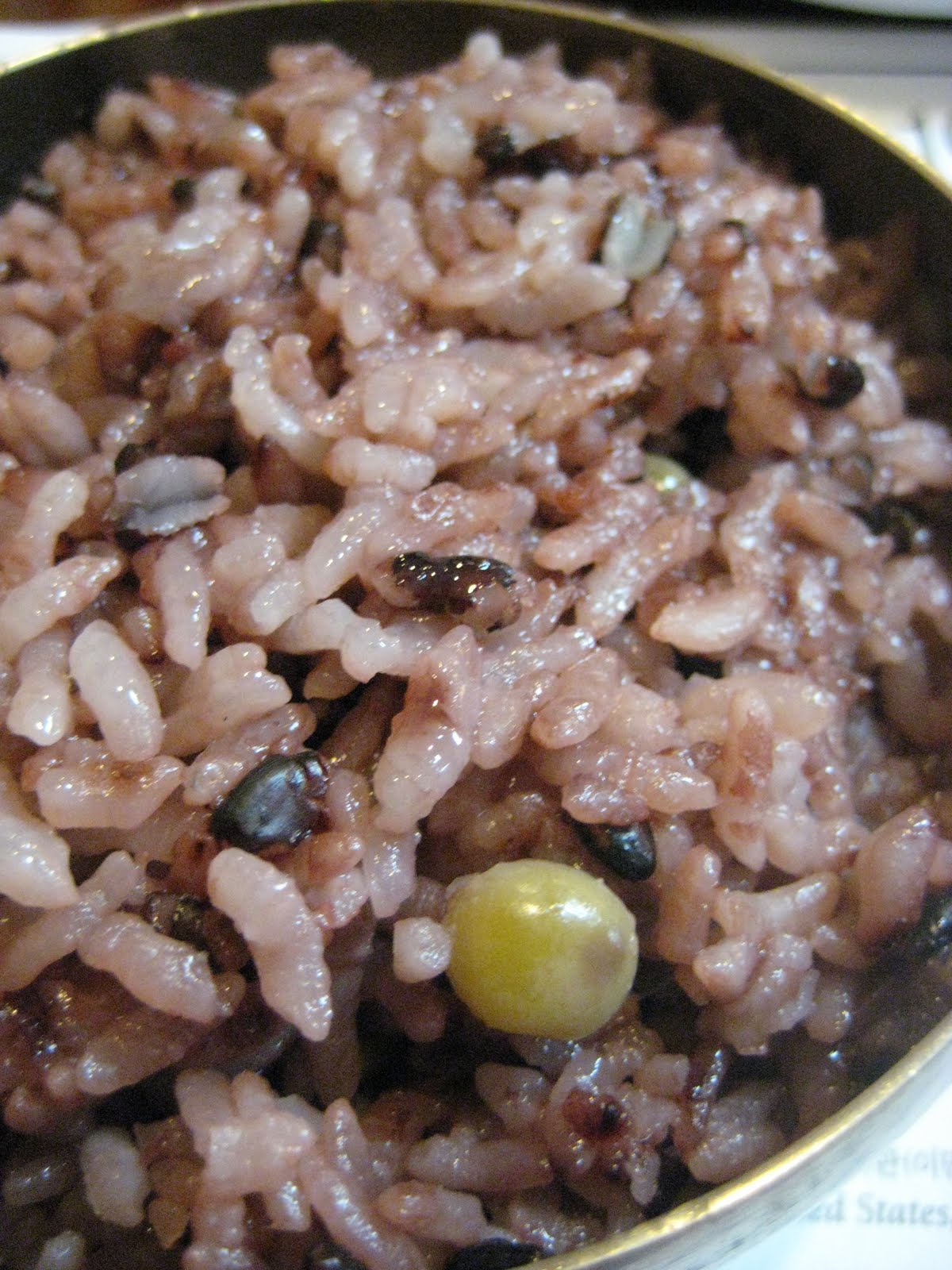
All the soups and fish stews are made from that broth and the depth of flavors attests to the attention and care put into it. The cod fish stew is a cornucopia of vegetables such as daikon radish, green onion, bean sprout, enoki mushroom and tofu dotted with thin slices of bone-in cod fillets. The Korean word for the stew, Mae Woon Tang, as listed on the menu, translates literally to “spicy soup,” so those ordering this should be prepared to sweat profusely and take intermittent digs into the bowl of burgundy-hued rice – the color a result of white rice peppered with black rice -- and peas that is at once mild and nutty like rice that has formed a brown crust on the bottom.

The squid japchae (only found on the Korean-language menu) is a winning, feistier cousin of the classic glass noodle dish stir-fried with soy sauce and sesame oil with carrot, green chili pepper and green onion, replacing the standard beef strips with squid to chewy effect. This japchae is best washed down with a drink, as it packs a punch from an addition of Korean red pepper paste, or kochujang, which the original japchae lacks.

An added uniqueness to this four-year-old establishment is that all orders come with a starter salad of greens, pineapple, strawberries and blackberries, smothered with a mango-pineapple dressing that is sweet and sour.

In many Korean restaurants, the quality of the banchan, or side dishes, is sometimes more important to patrons than the house specialty itself. Wando’s banchan are varied, fresh and at any given time feature at least four kinds of kimchi, the fiery and garlicky national dish of fermented everything: from napa cabbage to radish. Standouts include moogeunji, a type of napa cabbage kimchi that is aged for longer than the normal fermentation of a few days between the making and consuming of kimchi. Despite a longer fermentation period, the kimchi is crisp and isn’t pungent in a way that says the kimchi has seen better days – ideal as an accompaniment to milder dishes or a base for kimchi stew.

Another must-have is the garlic jjang-ajji, raw garlic that has been pickled in a mix of soy sauce, vinegar and water for 17 months until each clove has sucked up the liquid, taken on a darker tone and transformed into priceless gems. Bite into these extra-crunchy suckers that are salty, tangy and decidedly subtle in their pungent garlic flavor, and you’re hooked. Thankfully, pickled garlic mutes any lingering smell in your mouth, so proceed with confidence.

At the end of the meal, patrons can carry out a box of fresh mangos, blackberries or bell peppers that the owner will place by their tables as a token of his appreciation. Not sure what to do with 30 bell peppers? Maybe it’s time to do some pickling. I made blackberry jam for the first time thanks to boxes he gave me when I went one time.

Price: Grilled fish $8.99 to $19.99; braised fish $16.99 to $23.99; fish stews $8.99 to $15.99 (most dishes feed two or more); noodle dishes $8.99 to $12.99.

Best dishes: Grilled mackerel (Go Deung Uh Goo Ee), braised sable fish (Eun Dae Goo Jorim), squid chapjae (in Korean menu only) and cod fish stew (Dae Goo Mae Woon Tang). Also, extra-fermented kimchi and pickled garlic that are complimentary.

Details: Open daily 10 a.m. to 10 p.m. (Lunch specials are Mondays through Fridays until 3 p.m.). Beer, soju, traditional Korean liquors. Lot parking. Credit cards accepted.